English
 Français
 Español

Oct 19,2026
Pimientos rojos deshidratados: información sobre calidad, procesamiento y compra
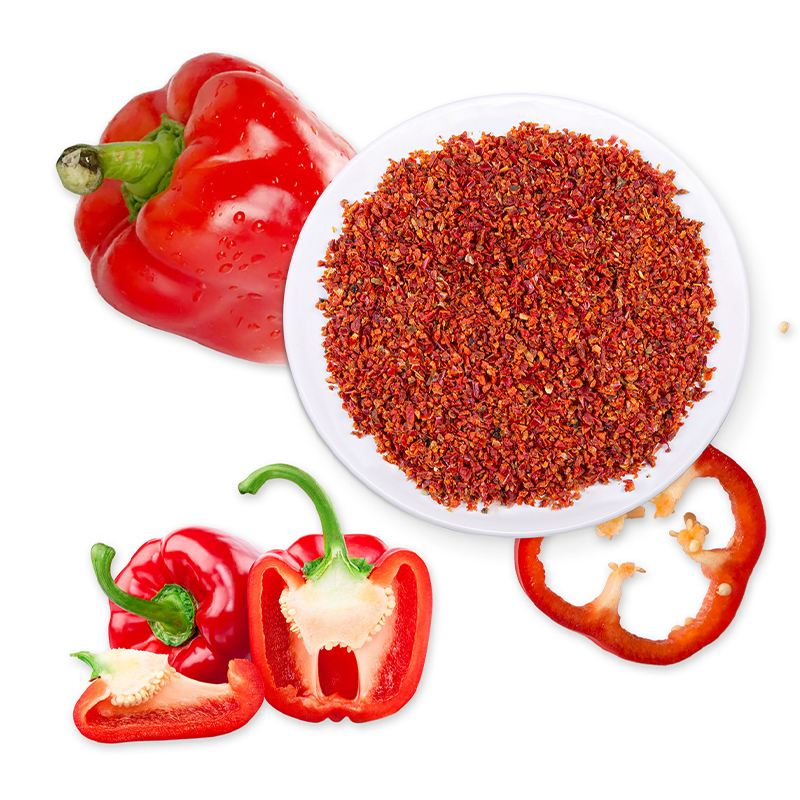
Para los fabricantes de alimentos, los pimientos rojos deshidratados son más que una guarnición colorida. Tienen sabor, estabilidad de vida útil y la confianza de una cadena de suministro que se puede rastrear.
Cuando un director de producción abre una caja de 10 kg de hojuelas de pimiento rojo deshidratado, lo primero que analiza es el contenido de humedad, no el color. Un lote de color rojo brillante que comienza a agruparse o pierde su dulce aroma no cumple con la única especificación que importa: la estabilidad. La calidad de los pimientos rojos deshidratados se decide mucho antes de sellar la caja: durante el cultivo, el lavado, el corte, el secado y el cribado.
Este artículo analiza cómo funciona la deshidratación comercial de pimiento rojo, qué comprobar antes de realizar el pedido y por qué la infraestructura física de un proveedor es la verdadera garantía de coherencia.
Por qué los fabricantes de alimentos eligen los pimientos rojos deshidratados
Los pimientos rojos frescos son principalmente agua. Son estacionales, su manipulación requiere mucha mano de obra y su transporte es caro. Al deshidratarlos se elimina aproximadamente entre el 85 y el 90 por ciento del peso original, al tiempo que se concentran los azúcares naturales, la capsantina y la vitamina C. En forma de hojuelas, gránulos o polvo, el ingrediente puede permanecer estable en un almacén de productos secos y aún ofrecer color y sabor meses después.
Para los desarrolladores de productos, las ventajas son prácticas:
- Sin dependencia de la cadena de frío para el almacenamiento
- Estandarización de recetas más sencilla en todos los sitios de producción
- Menores costos de flete y almacenamiento por dosis de sabor.
- Un suministro constante que no está vinculado a una ventana de cosecha
Cuando los proveedores gestionan estrictamente el abastecimiento de materias primas, estos beneficios se vuelven aún más predecibles.
Cómo funciona la deshidratación comercial
El proceso comercial es deliberadamente cuidadoso. Los pimientos rojos se lavan, se despalillan y se cortan a un tamaño uniforme. Dependiendo de la especificación, se pueden blanquear primero para neutralizar las enzimas. Luego pasan por un secador de aire caliente, donde la temperatura se mantiene por debajo de un nivel que dañaría el color o la capsaicina. El objetivo es eliminar la humedad sin convertir el pimiento en una cáscara quebradiza y sin sabor.
Si desea comprender el flujo de producción general detrás de los pimientos rojos, sigue los mismos principios que describimos en nuestro tutorial de cómo se hacen las verduras deshidratadas .
Una buena deshidratación no conserva el pimiento; conserva el campo donde creció.
En nuestras instalaciones de Mongolia Interior, la distancia entre el campo y la secadora es corta. El pimiento rojo crudo comienza a procesarse poco después de la cosecha, lo que limita la actividad enzimática y la pérdida de color antes del secado.
Escamas, gránulos o polvo: la forma importa
La forma de pimiento rojo deshidratado no es una opción cosmética. Cambia la superficie, la velocidad de rehidratación y el comportamiento del ingrediente en una mezcla seca. Las escamas son ideales para una textura visible; los gránulos se mezclan fácilmente; El polvo proporciona una liberación suave de color y sabor.
| Parámetro | copos | Gránulos | polvo |
|---|---|---|---|
| Contenido de humedad | ≤ 6% | ≤ 5% | ≤ 5% |
| Actividad acuática | ≤ 0,50 | ≤ 0,45 | ≤ 0,45 |
| Tamaño de partícula | 8-20 milímetros | 1-3mm | Malla 80-100 |
| Vida útil típica | 18 meses | 24 meses | 12 meses |
Observe la distribución del tamaño de las partículas, no sólo el tamaño promedio. Si el rango es demasiado amplio, las partículas finas pueden depositarse en el fondo del envase mientras que las piezas más gruesas permanecen en la parte superior, creando una dosis inconsistente en cada lote.
Especificaciones de calidad que protegen su producto
Antes de realizar el pedido, establezca los puntos críticos de control: contenido de humedad, actividad del agua, tamaño de partícula y color. El contenido de humedad determina el valor del peso y el riesgo de apelmazamiento. La actividad del agua predice la estabilidad microbiana. El tamaño de las partículas afecta la dispersión y la consistencia visual.
Peligro: Un lote con actividad de agua superior a 0,60 puede desarrollar moho incluso si el contenido de humedad parece aceptable. Solicite siempre un certificado de análisis y verifique el primer envío de forma independiente.
El tamaño uniforme de las partículas es tan importante como la pureza química. Una mezcla de condimentos puede verse desigual si la mitad de las hojuelas se convierten en polvo durante el transporte. Los proveedores confiables tamizan después del secado y monitorean la densidad aparente para mantener consistentes los pesos de las bolsas y el comportamiento de dosificación.
Lo que un proveedor creíble aporta
La huella de fabricación del proveedor importa más que el precio por kilogramo. Un deshidratador ubicado lejos del área de cultivo necesita recibir pimientos rojos aún en condiciones que permitan su secado. Nuestra empresa comenzó en 2003 en Xinghua y luego invirtió en una nueva instalación en Bayannur, Mongolia Interior, específicamente para pimientos, tomates y otros cultivos del noroeste de China. Esa proximidad significa que el pimiento rojo crudo puede comenzar a secarse en un breve período después de la cosecha.
Información: Las instalaciones de Bayannur están posicionadas como una base completa desde la materia prima hasta el producto terminado. Al gestionar la plantación y las operaciones de campo, la empresa reduce la variabilidad antes de que el pimiento ingrese a la fábrica.
Las certificaciones son la parte visible de la calidad, pero la parte invisible es el diseño de procesos. La certificación BRC A, lograda en 2024, indica una cultura de seguridad alimentaria en la que las marcas de alimentos internacionales pueden confiar. Al visitar o auditar a un proveedor, busque evidencia de que se inspeccionan las materias primas, se calibra la detección de metales y se registran los tiempos de secado por lote.
Uso de pimientos rojos deshidratados en productos alimenticios
En una receta, el pimiento rojo deshidratado se puede agregar directamente a una mezcla de condimentos secos o rehidratarlo en aceite, agua o caldo. Un copo típico puede absorber de tres a cuatro veces su peso en líquido, lo que aumenta la actividad acuosa de la salsa final. Es necesario equilibrar el pH, el sistema de conservación y el embalaje en consecuencia.
Advertencia: si su formulación objetivo tiene una actividad de agua superior a 0,85, no asuma que el pimiento rojo deshidratado permanecerá estable en almacenamiento. Tenga en cuenta la migración del agua y ajuste su formulación.
La liberación del color es otra consideración. Si se agrega el pimiento a un producto a base de grasa, la oleorresina de color rojo anaranjado migrará lentamente al aceite. Esto puede ser deseable en un aceite de chile, pero puede resultar perjudicial en una salsa de crema pálida. Probar el producto terminado en el nivel de uso exacto es la única forma confiable de establecer las especificaciones.
Éxito: Para los adobos de carne, los gránulos a menudo superan a las hojuelas porque se hidratan más rápido y se esparcen de manera más uniforme sin crear una textura visual inconsistente.
Consideración final
Los pimientos rojos deshidratados ganan su lugar en una formulación en la que se pueden verificar todos los componentes. Establezca un límite de humedad y actividad de agua, acuerde un rango de tamaño de partículas y seleccione un proveedor cuya base de producción esté cerca de la fuente. Estas acciones pueden parecer simples, pero evitan las costosas sorpresas que aparecen solo después de abrir la caja.